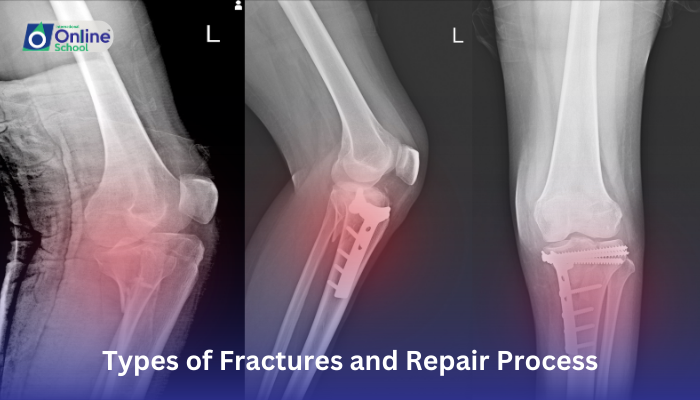
Learning Outcomes:
i. Differentiate between simple, compound, and complicated fractures based on their severity and involvement of surrounding tissues.
ii. Describe the natural stages of bone repair in a simple fracture, highlighting the body's incredible healing mechanisms.
iii. Appreciate the importance of proper medical care and rehabilitation in facilitating optimal bone healing.
Introduction:
Imagine your body as a magnificent castle. Though seemingly strong, even its walls can suffer cracks or breaks. In this lesson, we'll explore the world of fractures, the cracks and breaks that can occur in our bones, and the remarkable process by which our bodies mend them.
i. Fracture Types: A Spectrum of Breakages
Fractures come in different forms, each with its own severity and impact. Let's delve into the three main types:
Simple fractures: These are the "clean breaks" where the bone cracks or breaks but remains within the surrounding tissue, with no damage to skin or blood vessels.
Compound fractures: These fractures involve a break in the bone that pierces the skin, exposing the bone to the outside environment, increasing the risk of infection.
Complicated fractures: These involve additional damage to surrounding structures like blood vessels, nerves, or organs, adding complexity to the healing process.
ii. The Healing Journey: A Dance of Cells and Minerals
When a bone breaks, a fascinating symphony of healing begins. Let's explore the key stages of this process in a simple fracture:
Hematoma formation: Blood vessels rush to the injured area, forming a clot (hematoma) that stabilizes the fracture and provides essential growth factors.
Fibrocartilage callus formation: Specialized cells called fibroblasts lay down a network of collagen fibers, forming a soft, temporary "cast" called fibrocartilage callus.
Bone callus formation: As healing progresses, the fibrocartilage callus is gradually replaced by bone callus, a harder, more mineralized structure bridging the fracture gap.
Remodeling and resorption: Over time, the bone callus is remodeled and replaced by mature bone, restoring the original strength and structure of the fractured bone.
iii. A Collaboration for Healing:
This intricate process involves the coordinated action of various cells and factors:
Osteoblasts: These specialized cells build new bone tissue, filling the fracture gap with mineral-rich bone matrix.
Osteoclasts: These cells remove old and damaged bone tissue, making way for the new bone to grow.
Blood supply: Adequate blood flow is crucial for delivering oxygen and nutrients to the healing bone.
Growth factors: These proteins released by cells stimulate the healing process and guide bone formation.
iv. Supporting the Healing Path:
While our bodies are equipped with remarkable healing mechanisms, proper medical care and rehabilitation play vital roles in optimizing bone repair:
Immobilization: Casts, splints, or surgery may be needed to stabilize the fracture and prevent further damage during healing.
Pain management: Medication can help manage pain and allow for physical therapy exercises.
Weight-bearing activities: Gradual weight-bearing exercises, as advised by a doctor, stimulate bone formation and strengthen the healing bone.
Fractures, though potentially debilitating, are not insurmountable challenges. Understanding the different types and the remarkable repair process that unfolds within our bodies empowers us to appreciate the healing potential we possess. By collaborating with healthcare professionals and following proper recovery protocols, we can facilitate optimal bone healing and regain the strength and mobility necessary to live a full and active life. Remember, even the mightiest castle can heal its cracks, and so can we!
